



Blog Detail The History of Kueh in Singapore: Heritage on a Little Plate
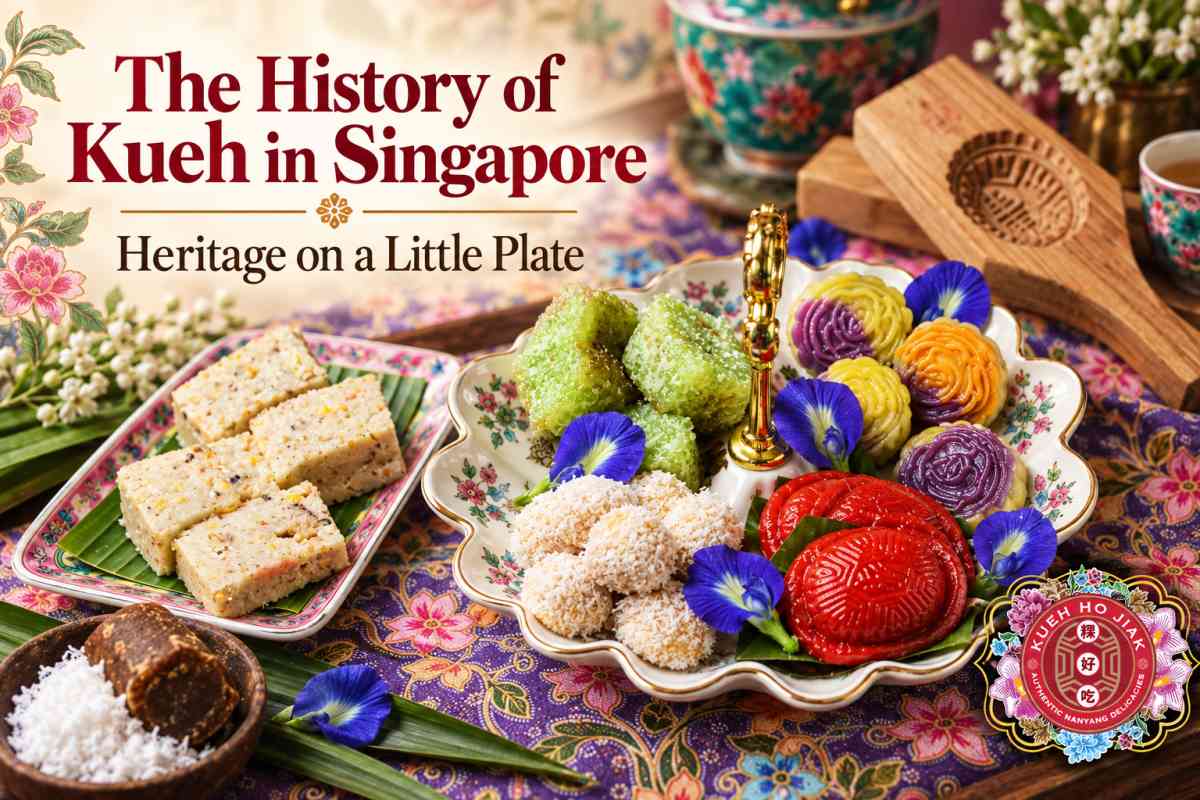
Singapore’s edible heritage fits in the palm of your hand. Bite-sized, steamed, fragrant and full of meaning, kueh are far more than sweet treats – they are living records of the cultures, families and trade routes that shaped this island.
Here is the history of kueh in Singapore, from 15th-century ports to modern gifting boxes, and why every piece still matters today.
Table of Contents
Key Takeaways
- Kueh are staples in Singaporean food culture. The word kueh refers to bite-sized snacks – steamed, grilled or fried cakes made from rice, coconut, sugar and aromatic leaves. These small parcels are an integral part of daily meals, tea-time rituals and celebratory occasions across Singapore. Kueh are bite-sized snacks central to Singapore’s culinary identity, reflecting centuries of migration, trade, and cultural intermarriage in the Malay Archipelago.
- Multiple cultures built this tradition. Kueh in Singapore grew out of Malay, Chinese, Peranakan, Indonesian, and Indian influences along key trade routes from the 15th to the 19th century. Iconic varieties – ang ku kueh, kueh lapis, nyonya kueh, huat kueh and kueh dadar – carry symbolic meanings for prosperity, longevity and family unity. Kueh represents a blend of Malay, Chinese, Indonesian, and Peranakan traditions.
- Kueh culture nearly faded, then came back. From the 1980s through the 2000s, urbanisation and the rise of foreign desserts pushed handmade kueh to the margins. Since the 2010s, artisanal makers, workshops and thoughtful gifting have revived interest. Kueh is essential at weddings, new births, and festivals, and is often served across Singapore.
- Heritage lives in every piece. Kueh evolved from household items into a modern creative industry. At Kueh Ho Jiak, we see every handmade kueh as a way to preserve heritage, share natural ingredients with the next generation, and celebrate everyday milestones – one kueh at a time.
Origins of Kueh in the Malay Archipelago
Picture a busy port somewhere along the Malay Peninsula in the 1400s. Wooden ships carry cinnamon and cloves from the Spice Islands, rice from Java, coconut from Sumatra.
Traders speaking Hokkien, Malay, Tamil and Arabic crowd the docks, and in the market stalls behind them, women press glutinous rice into leaf-wrapped parcels, steam rice flour batter over charcoal fire, and drizzle palm sugar over grated coconut.
These simple snacks – kueh in every sense – are the ancestors of what we enjoy in Singapore today.
Kueh originated in Southeast Asia during the 15th century, shaped by ingredients native to the Malay Archipelago: rice, glutinous rice, sago flour, tapioca flour, coconut milk, gula melaka, pandan leaves and banana leaves.
The word kueh itself is a window into cross-cultural exchange. The term originates from Southern Min dialects – specifically Hokkien “kueh” (粿) – referring to rice-based cakes.
The Malay word “kuih” closely mirrors it. Both communities used the same word to describe similar dishes: small, steamed or boiled cakes flavoured with coconut, sugar and leaf aromatics.
As trade expanded, so did the pantry. Chinese merchants, arriving as early as the Ming dynasty, brought wheat flour, refined sugar, and steaming techniques. Indian traders contributed rice cake methods and spices.
Arab and later Portuguese, Dutch and British colonials introduced baking, eggs and butter, enabling richer variations. Sweet potato and tapioca – New World crops that reached the archipelago via colonial trade – added new textures.
By the 18th and 19th centuries, distinct but related kueh traditions had formed across present-day Indonesia, Malaysia (including Kuala Lumpur), and Singapore, with steamed, grilled and fried varieties reflecting each region’s unique blend of Malay cultures and immigrant communities.
Kueh evolved through migration, colonisation, and globalisation into the diverse landscape of ethnic foods we know today.
How Kueh Took Root in Singapore
Singapore’s transformation began in 1819 when Stamford Raffles established it as a free port, drawing waves of migrants. Hokkien and Teochew settlers from southern China, Malay and Javanese families from across the archipelago, Indian labourers and Peranakan households all converged in a small island – and they all brought kueh.
From the late 19th to mid-20th century, kampong markets and pushcart hawkers sold kueh from dawn to dusk. Morning stalls offered kueh tutu, chwee kueh, soon kueh and putu piring. Evening carts carried nyonya kueh, huat kueh and steamed glutinous rice parcels.
Chinese immigrants brought ang ku kueh and huat kueh specifically for prayer offerings, temple festivals and life-cycle celebrations – birthdays, baby full-month ceremonies and weddings.
Kueh-making traditionally involved elderly women using approximations rather than precise measurements, passing down a recipe through gesture, taste, and memory. Community and sharing were integral to the traditional preparation of kueh in these neighbourhoods.
Malay and Javanese communities contributed kueh dadar, ondeh-ondeh, kueh bingka and coconut-rich kuih that became everyday snacks in Singapore coffee shops. These were traditionally served on banana leaf sections, fragrant and warm.
The lines between communities blurred deliciously – a Peranakan household might serve Malay-style kueh dadar alongside Chinese huat kueh, all on the same kueh platter.
Modernisation gradually shifted production. Gas and electric stoves replaced charcoal fire setups; refrigeration extended shelf life. The move from kampongs to HDB flats in the 1960s–70s meant smaller kitchens and less time for labour-intensive kueh.
Many families began buying from a neighbourhood kueh shop rather than making their own, and kueh-making techniques traditionally passed down through generations risked being lost.
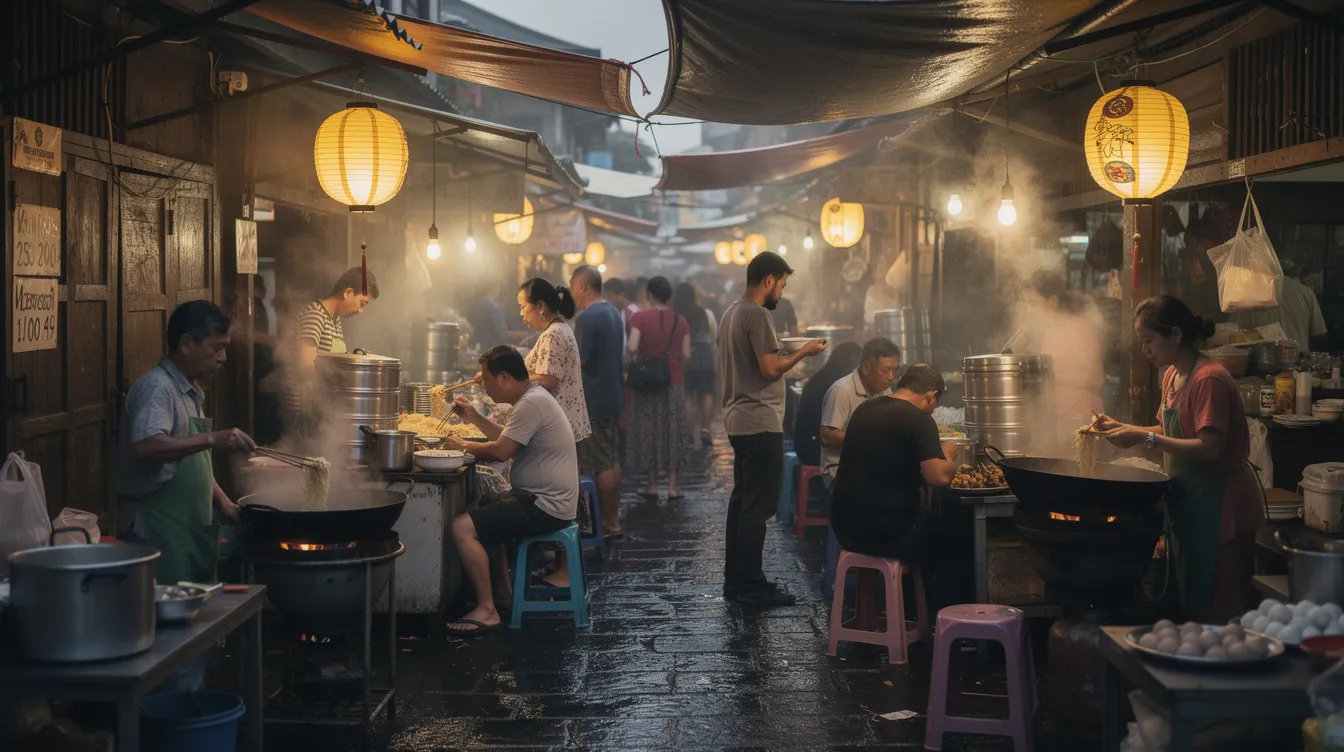
Nyonya Kueh and Peranakan Influence in Singapore
Peranakans – descendants of Chinese migrants who settled in the Malay archipelago and intermarried with local Malay and Indonesian families – developed one of Singapore’s most visually striking kueh traditions.
Known as Baba-Nyonya, this community shaped peranakan culture in enclaves like Katong and Joo Chiat, and their contribution to kueh is unmistakable. Peranakan culture significantly influenced kueh in Singapore, creating what we now call peranakan kueh or nyonya kueh.
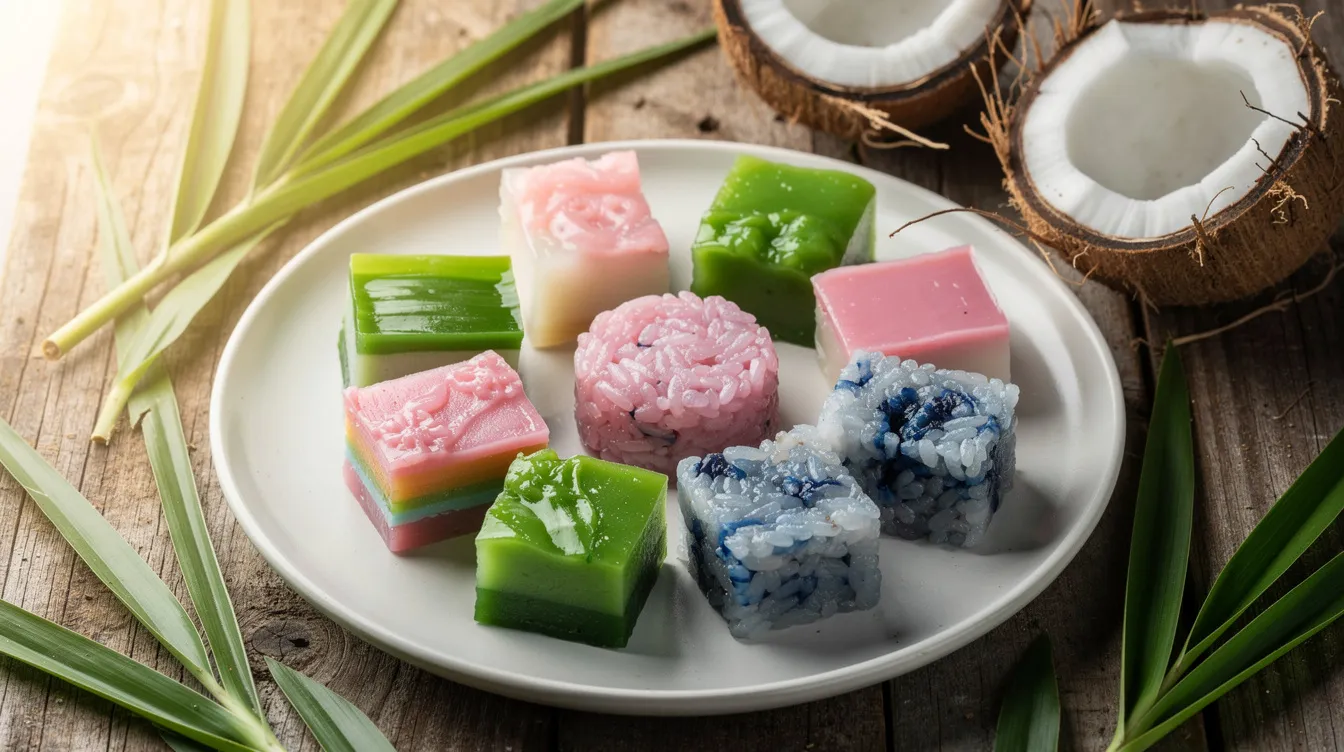
Signature traits of nyonya kueh include vivid natural colours – pandan juice for green, blue pea flower for blue, turmeric for gold – layered textures, and carefully balanced sweet–salty coconut flavours. Ingredients like gula melaka, coconut milk, freshly grated coconut and pandan are essential.
The colour red in kueh symbolises auspiciousness in Peranakan culture, while certain kueh are coloured blue for funerals, showing how deeply colour carries meaning in this tradition.
Well-known Nyonya kueh popular in Singapore include kueh lapis (the steamed nine-layer kueh), kueh talam (with its distinctive white layer of coconut custard sitting atop a pandan-green bottom layer), kueh salat – also known as Kueh Seri Muka, which features a two-layer cake with glutinous rice and pandan custard – pulut inti, Pulut Tai Tai (a compressed glutinous rice cake traditionally served with kaya), and rempah udang.
Ondeh-ondeh, those little glutinous rice balls bursting with liquid gula melaka, also owe much to Nyonya refinement.
Nyonya kueh making was historically a marker of a woman’s skill and patience. Traditional kueh recipes are often passed down through generations through handwritten notebooks and oral teaching.
Today, nyonya kueh is widely loved beyond Peranakan families and appears at hotel buffets, kopitiams and premium kueh boxes, symbolising shared Singaporean heritage. Traditional kueh is now widely available in shops and restaurants across the island.
Symbolic and Festive Kueh in Singapore
Many kuehs are tied to auspicious occasions and religious rituals. Colour, shape, name and number all carry weight. Here are some of Singapore’s most meaningful kueh, each one a small lesson in cultural memory.
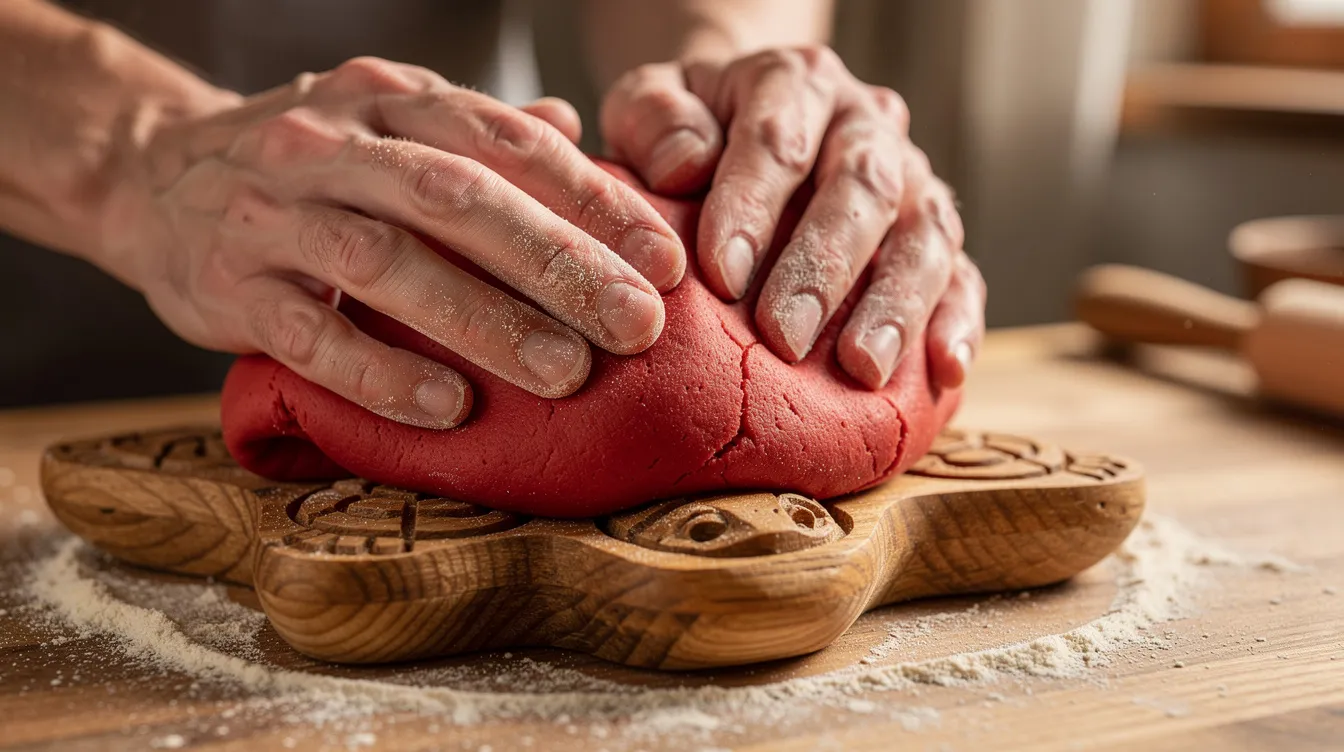
Ang ku kueh traces its roots to Fujian province in southern China, arriving in Singapore with Hokkien migrants in the 19th century. The rice flour dough skin – traditionally dyed red – is pressed into a tortoise-shaped mould and filled with sweet mung beans or roasted peanuts.
Ang Ku Kueh is shaped like a tortoise and symbolises longevity, while its red colour signals joy and auspiciousness. It plays a central role in baby full-month celebrations, birthdays and temple offerings.
Makers like Kueh Ho Jiak and the team have kept the craft alive, even offering larger “Ka Ta Kueh” versions for stepping rituals.
Huat kueh is a pink steamed cake symbolising prosperity. Its Southern Chinese origins connect it to farming communities who used leftover rice flour batter to create these small, risen cakes.
“Huat” in Hokkien means to grow or prosper, and the characteristic cracked – or “smiling” – top is considered deeply auspicious. Huat Kueh is a pink steamed cake used in prayer offerings during Lunar New Year, at business openings, and for major family milestones in Singapore.
Kueh lapis, the soft, chewy, colourful steamed nyonya variety, is distinct from the baked Dutch-Indonesian lapis legit (which relies on butter, spices and eggs). Singapore’s version is made from rice flour and coconut milk, steamed coloured layer by coloured layer.
Each coloured layer is poured, set, then topped with the next – many are handcrafted, steamed layer-by-layer to represent patience and tradition.
The finished kueh has nine layers, symbolising progress and completeness in Chinese culture, and children love peeling them one by one. Kueh Lapis is a staple in local breakfast spreads, school canteens and party platters.
Colour has significance in kueh; for instance, pink-and-white Jiu Ceng Gao represents longevity.
Kueh dadar is a pandan-green crêpe rolled with a coconut filling of grated coconut cooked in palm sugar, with roots in Javanese and Malay kitchens.
Kueh Dadar is a rolled crêpe filled with palm sugar and coconut that travelled to Singapore via Malay and Indonesian communities, becoming a tea-time favourite in kopitiams and home gatherings.
Its fragrance – pandan essence mingling with caramelised gula melaka – is one of the most nostalgic aromas in Singaporean food culture.
Beyond these four, Singapore’s kueh heritage includes many other treasures for special occasions:
| Kueh | Key Feature | Occasion |
| Kueh Tutu | Steamed rice flour filled with coconut or peanut, served on a banana leaf | Daily kopi, heritage markets |
| Kueh Bugis | Pandan-infused dough filled with grated coconut | Festive spreads, Hari Raya |
| Kueh Bahulu | Soft sponge cake, often found during Hari Raya | Hari Raya, celebratory occasions |
| Chwee Kueh | Steamed rice cakes with preserved radish relish | Breakfast, hawker centres |
| Kueh Bingka | Dense, caramelised tapioca or sweet potato cake | Tea time, temple offerings |
Food writer Christopher Tan has noted how the same kueh can carry different meanings depending on the community preparing it – a reminder that kueh have diverse cultural roots and modern innovations continue to evolve their flavours.
Kueh sold during festivals like the annual Hari Raya bazaar showcase this diversity beautifully, with similar dishes appearing in Malay, Chinese and Peranakan versions side by side. Organisations like Mendaki also help local kueh makers showcase their products during such festivals.
Kueh Culture in Modern Singapore
Singapore’s rapid development from the 1970s through the 1990s led to a decline in traditional kueh skills. Hawkers retired, younger Singaporeans pursued other careers, and the demanding hours of hand-grating coconut and steaming rice over a charcoal fire held little appeal for a new generation.
Many beloved recipes – each a traditional recipe honed over decades – went unrecorded. The tools themselves grew scarce: wooden moulds cracked, brass pie tee forms rusted, and sources for natural dyes became harder to find.
Supermarket snacks, fast food and foreign desserts competed with heritage kueh. Families who once made kueh at home now bought mass-produced versions with preservatives and artificial colouring.
Singapore Food Agency regulations on preservatives added compliance costs for small artisanal producers. There were real concerns that kueh culture – and the time-intensive handmade methods behind it – might quietly disappear.
The revival came gradually from the 2010s onward. Food festivals, heritage trails through Peranakan enclaves like Katong and Joo Chiat, social media storytelling and television programmes celebrating nyonya kueh, ang ku kueh and huat kueh brought heritage cakes back into the spotlight.
The National Heritage Board’s intangible cultural heritage programmes gave formal recognition to traditions like kueh tutu making.
Younger Singaporeans now seek “authentic yet modern” kueh: traditional shapes and techniques paired with updated flavours, natural colouring from butterfly pea flower and pandan juice, and lighter sweetness. Pressed glutinous rice treats appear alongside durian-infused ang ku kueh.
Glutinous rice cooked with blue pea flower creates striking violet hues. Even pea flower ice kueh and sweet potato-filled ang ku kueh push boundaries while respecting craft.
Kueh now plays a prominent role in corporate and personal gifting. Premium kueh boxes serve as festive hampers for offices, wedding favours, and baby shower treats – showcasing Singaporean identity in a polished, meaningful way.
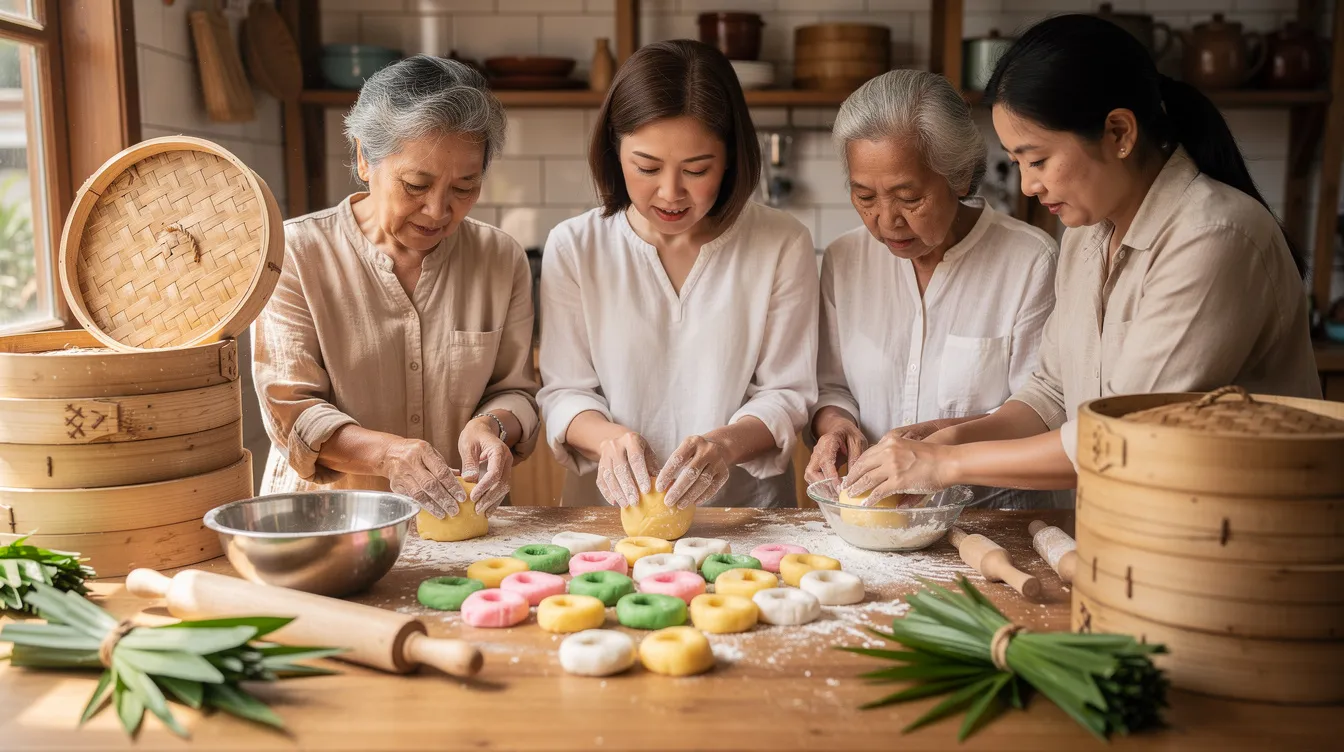
Kueh-making workshops are open to the public today, with families, schools and companies learning to fold, steam and shape kueh together, turning heritage into a shared, hands-on experience.
Kueh Ho Jiak’s Role in Preserving Singapore’s Kueh Heritage
At Kueh Ho Jiak, we are a family-led, proudly Singaporean kueh maker, and we believe that every kueh carries a story worth telling. Our mission is simple: to preserve heritage one kueh at a time, using the same care and natural ingredients that grandmothers once brought to their kampong kitchens.
We are committed to handmade methods: traditional moulds, small-batch steaming, freshly grated coconut, and natural ingredients such as pandan leaves, gula melaka and blue pea flower. There are no artificial dyes or shortcuts – just rice flour, coconut, palm sugar, pandan, and patience.
We honour classics like ang ku kueh, huat kueh, kueh lapis and nyonya kueh while thoughtfully introducing new flavours that respect the original craft. Our premium gifting options include curated kueh assortments for:
- Chinese New Year – huat kueh and ang ku kueh for prosperity
- Hari Raya – kueh dadar, kueh bahulu and ondeh-ondeh selections
- Weddings & baby full-month – symbolic kueh presented in elegant packaging
- Corporate appreciation – polished boxes suitable for boardrooms and client gifts
We also offer kueh workshops and educational experiences for schools, companies and families, where participants learn the stories behind each kueh and try their hand at shaping, wrapping and steaming.
These sessions bring history to life – and fill the room with the unforgettable scent of pandan essence and coconut.
Every box of kueh from Kueh Ho Jiak is a bridge between generations. Grandparents recognise the shape and smell. Children grow up loving the taste of peeling kueh lapis layer by layer.
Friends overseas open a box and find themselves back home in Singapore. That connection – across distance, across decades – is what keeps us going.
FAQ: History of Kueh in Singapore
When did kueh first appear in Singapore?
Kueh-style snacks have existed in the Malay world since at least the 15th century, but in Singapore specifically they became prominent from the 19th century onwards with the growth of the port after 1819 and the arrival of Malay, Chinese, Peranakan and Indian communities. Hawkers sold kueh in street markets, kampongs and near temples, making them part of daily life within a generation.
What is the difference between nyonya kueh and other kueh in Singapore?
Nyonya kueh comes from Peranakan (Straits-born Chinese) culture and often features colourful layers, coconut milk, gula melaka, pandan, and intricate preparation techniques. While Malay and Chinese kueh may use similar base ingredients, they differ in flavour balance, shapes, and festive uses. For example, Malay kueh may emphasise coconut and leaf wrappings, while Chinese kueh like ang ku kueh focus on symbolic shapes and rice flour dough. Nyonya kueh bridges both worlds with its hybrid heritage.
Is kueh still made the traditional way in Singapore?
Yes – though in smaller numbers than before. Some mass-produced versions rely on preservatives and artificial colours, but many heritage-focused makers, including Kueh Ho Jiak, still hand-grate coconut, steam in small batches, and use traditional moulds and natural dyes. The artisanal segment distinguishes itself through quality, heritage knowledge, and handmade care.
Why are some kueh, such as ang ku kueh and huat kueh, associated with luck and prosperity?
These kueh originated from Southern Chinese communities where colours, shapes and names carry deep symbolic meanings. Red signals joy and auspiciousness, the tortoise shape represents long life, and “huat” means “to prosper.” They naturally became part of prayer offerings and celebratory occasions in Singapore – from Lunar New Year altars to baby full-month spreads and business openings.
How can I introduce traditional kueh to younger children today?
Start with bite-sized assortments and share simple stories behind each kueh – why ang ku kueh is shaped like a tortoise, why huat kueh “smiles.” Let children peel the individual layers of kueh lapis, roll kueh dadar, or press rice flour into moulds. Attending a family-friendly kueh workshop at places like Kueh Ho Jiak makes the experience hands-on and memorable, turning a taste into a tradition they will carry forward.