



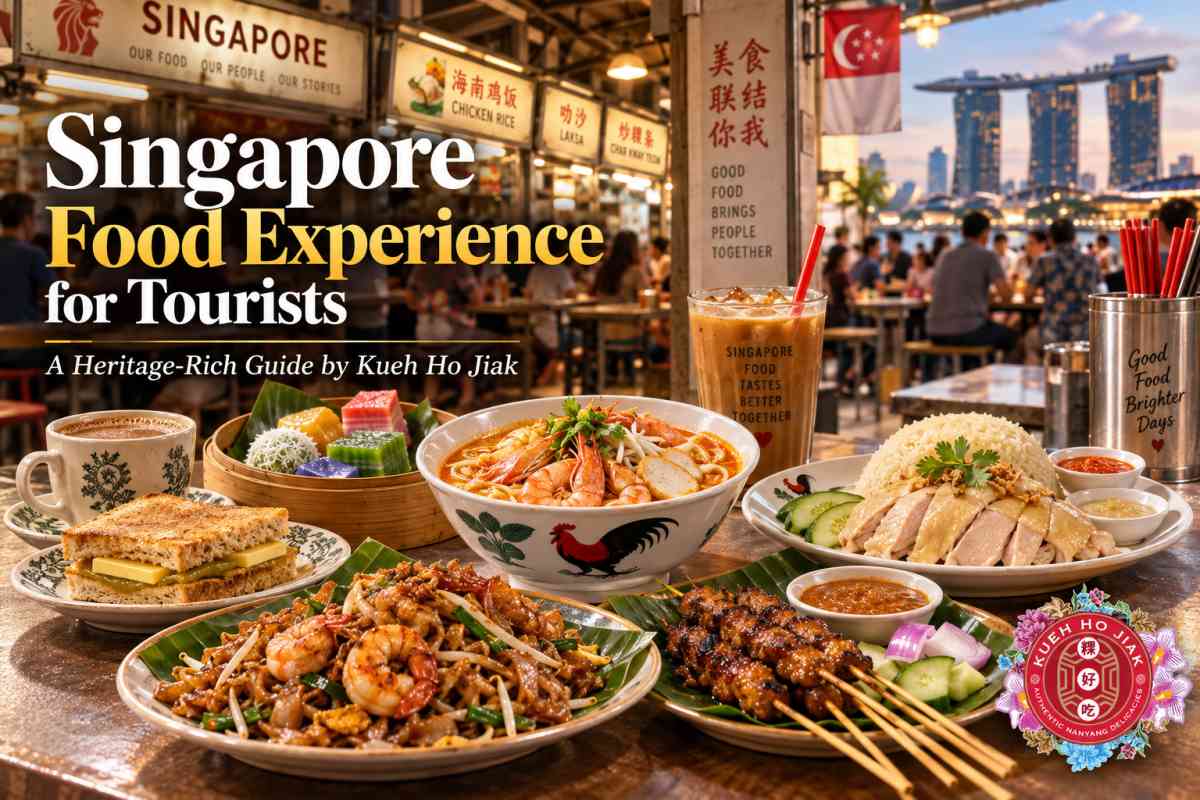
Blog Detail Singapore Food Experience for Tourists: A Heritage-Rich Guide by Kueh Ho Jiak

Why Food in Singapore Feels Like One Big Family Table
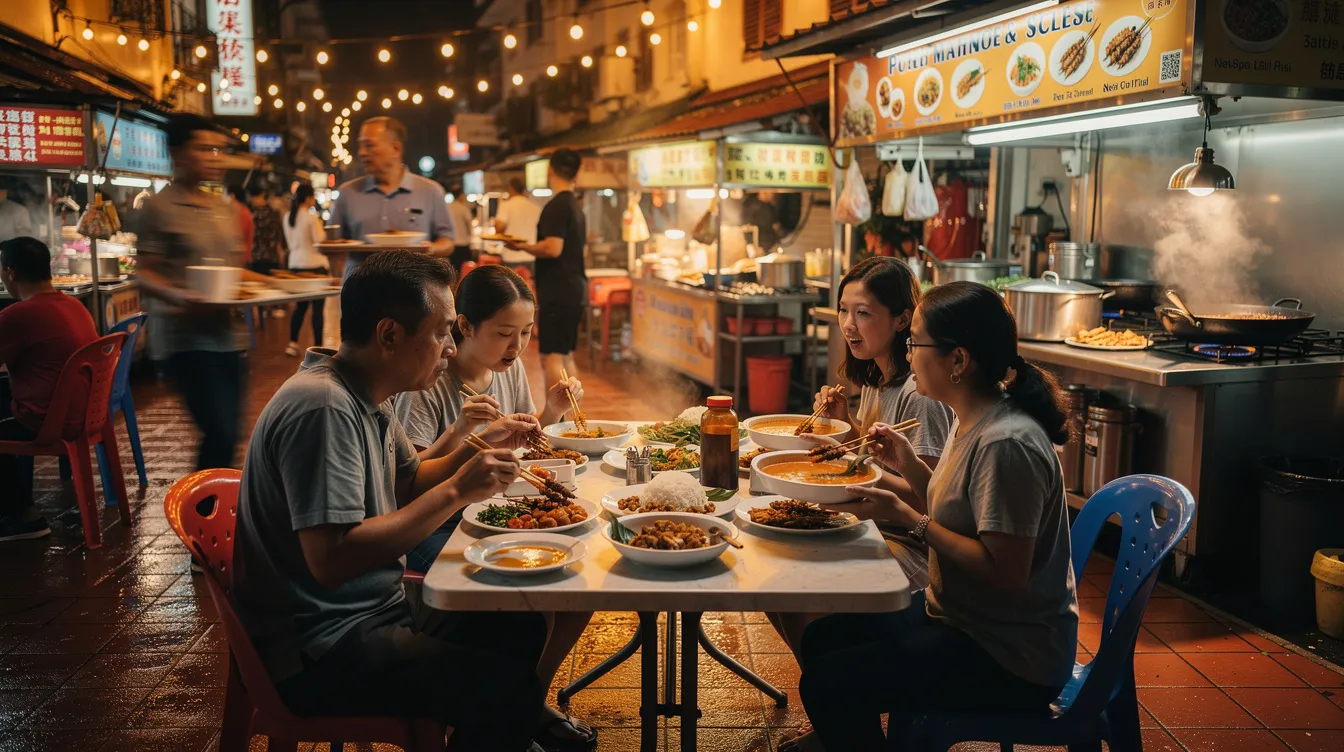
Close your eyes for a moment and imagine this: you step into a sprawling hawker centre at noon, the air thick with the haze of wok-hei rising from a char kway teow stall, the scent of lemongrass-laced laksa broth drifting past you, and the rhythmic clatter of chopsticks on porcelain echoing across communal tables.
Somewhere nearby, a Malay stall sizzles beef rendang while an Indian roti prata vendor tosses dough with practised ease. This is not a food festival. This is just lunch in Singapore.
Singapore offers a diverse array of unique food experiences influenced by multiple cultures-Chinese, Malay, Indian, and Peranakan traditions colliding and collaborating across every neighbourhood.
The city earned its reputation as a world food capital not through Michelin-starred restaurants alone, but through its hawker culture, which was recognised by UNESCO in 2020 as Intangible Cultural Heritage of Humanity.
At Kueh Ho Jiak, we are a family-led, proudly Singaporean maker of handmade kueh, and we believe every bite carries a story.
This guide blends practical tourist tips with heritage-focused recommendations to help first-time visitors plan a meaningful Singapore food experience-one that goes far beyond Instagram. What to eat, where to go, how to behave, and how to support the heritage foods that make this island extraordinary.
Table of Contents
Key Takeaways
- Singapore is a world food capital shaped by hawker centre culture, heritage recipes handed down across generations, and family-run food stalls where Chinese, Malay, Indian, and Peranakan cuisines converge on a single table.
- Must-try Singaporean dishes include chicken rice, laksa, char kway teow, beef rendang, chilli crab, claypot rice, and traditional kueh-each one telling a story of migration, resilience, and multicultural love.
- A simple 2–3 day food itinerary covering iconic hawker centres like Old Airport Road Food Centre, Maxwell Food Centre, and neighbourhood gems in Katong, Little India, and Kampong Glam gives you a deep, authentic taste of Singapore food.
- Learning to eat like a local-queuing at popular food stalls, sharing tables, and respecting hawker customs-transforms a meal into a genuine cultural experience.
- Preserving Singapore’s food heritage through mindful eating, kueh workshops, and choosing handmade, natural-ingredient treats supports the families and culinary traditions that make this city extraordinary.
Singapore as a Food Capital: Beyond Fancy Restaurants
Singapore is globally celebrated for its delicious food not just for its variety, but for a rare combination: strict food safety standards, a multicultural heritage stretching back centuries, and the ability to find extraordinary meals at almost any budget.
Whether you are spending three Singapore dollars on a plate of nasi lemak or sitting down to chilli crab at a waterfront restaurant, the quality and care remain remarkably consistent.
Here are the key pillars that define the food scene:
- Hawker centre culture: With over 110 hawker centres across the island, these open-air complexes are the heartbeat of daily dining. Hawker centres originated in the mid-1800s as gathering points for street food vendors and have since been formalised into the clean, regulated spaces visitors enjoy today.
- Family recipes: Many stalls sell dishes perfected over two or three generations, with cooking techniques like wok-hei passed down through years of apprenticeship.
- Multicultural fusion: Singapore’s food reflects a blend of Chinese, Indian, and Malay cuisines, with Peranakan cuisine- born from the intermarriage of Chinese immigrants and local Malay communities-adding yet another delicious layer.
- Modern reinvention: Restaurants Singapore-wide now reimagine classics with contemporary twists, but the originals at hawker centres remain the gold standard.
When UNESCO inscribed Singapore’s hawker culture in 2020, they acknowledged what locals already knew: hawker centres are a key part of Singapore’s culinary landscape-living museums where you eat heritage, not just observe it.
Food in Singapore is communal. You share tables with strangers, chat with hawker uncles and aunties who have run stalls for decades, and discover that every dish has a family behind it.
Must-Try Singapore Dishes for First-Time Visitors
Think of this as your curated starter list of essentials-the singaporean cuisine greatest hits that will set your taste buds on fire without overwhelming you. Each dish carries cultural weight, and tasting them at a hawker centre is part of the story.
Hainanese Chicken Rice
Hainanese chicken rice is Singapore’s national dish. Silky poached or roasted chicken served over fragrant rice cooked in chicken fat and chicken broth, with chilli sauce, ginger paste, and dark soy sauce on the side. A beloved dish found at almost every food centre in the country, typically S$5–7 per plate. It is comfort food in its purest form.
Laksa
Laksa is a spicy coconut curry noodle soup-a spicy noodle soup of thick rice noodles (or vermicelli) swimming in a rich coconut milk broth with prawns, fish cake, and bean sprouts. The Katong variant uses short-cut noodles so you can eat with just a spoon. S$5–7 at most hawker food stalls. This dish bridges Malay, Peranakan, and Chinese culinary traditions in a single bowl.
Char Kway Teow
Char kway teow features flat rice noodles stir-fried with seafood-stir fried flat noodles tossed in a blazing-hot wok with prawns, cockles, egg, chinese sausage, bean sprouts, and sometimes crispy pork lard for that unmistakable wok-hei flavour. The savoury sauce, made with sweet dark soy sauce, ties it all together. S$4–7 at hawker centres. Once labourer fuel in the 1950s–60s, now a popular local food icon.
Satay
Satay consists of grilled skewers of chicken, beef, or mutton, served with peanut sauce, cooked over hot charcoal. Lau Pa Sat is known for its open-air satay street, where the smoky aroma fills the evening air. About S$0.70–1 per stick-order ten or more and share. This is street food at its most sociable.
Chili Crab
Chilli Crab is a must-try local speciality in Singapore. Whole mud crab in a tangy, slightly sweet curry sauce with just the right amount of heat. It is a messier, more expensive affair- chilli crab costs around £20–30 for a whole crab at restaurants Singapore-wide. Worth every splattered napkin.
Claypot Rice
Claypot rice is fragrant rice cooked slowly in a clay pot over charcoal, topped with Chinese sausage, dark soy sauce, and sometimes minced pork or salted fish. The prized crispy rice crust at the bottom is what regulars fight over. S$6–10 at hawker stalls.
Beef Rendang
Beef rendang is a Malay dish of beef slow-cooked in coconut milk, lemongrass, galangal, and dried chillies until almost dry and intensely caramelised. It is spicy food at its most aromatic-festive, communal, and deeply satisfying. Found at nasi padang stalls for S$5–8.
Kaya Toast & Kopi
Kaya Toast is a traditional breakfast in Singapore-crispy toast spread with coconut jam (kaya) and butter, served with soft-boiled eggs and strong local kopi. This is how Singaporeans start their mornings at coffee shops and eating house spots across the island. About S$4–6 for the set.
Other Essentials
Don’t overlook roti prata (flaky Indian flatbread with curry), fish head curry (a beloved Indian-Singaporean creation often served on banana leaf), bak kut teh (peppery pork rib soup), hokkien mee (prawn noodles), bak chor mee (minced pork noodles with vinegar), carrot cake (fried radish cake with egg-no carrots involved), oyster omelette, roast meats from Chinese stalls, and thick yellow noodles in various preparations. And western food options exist at most food courts too, though the local delights are where the magic lives.
Traditional Kueh
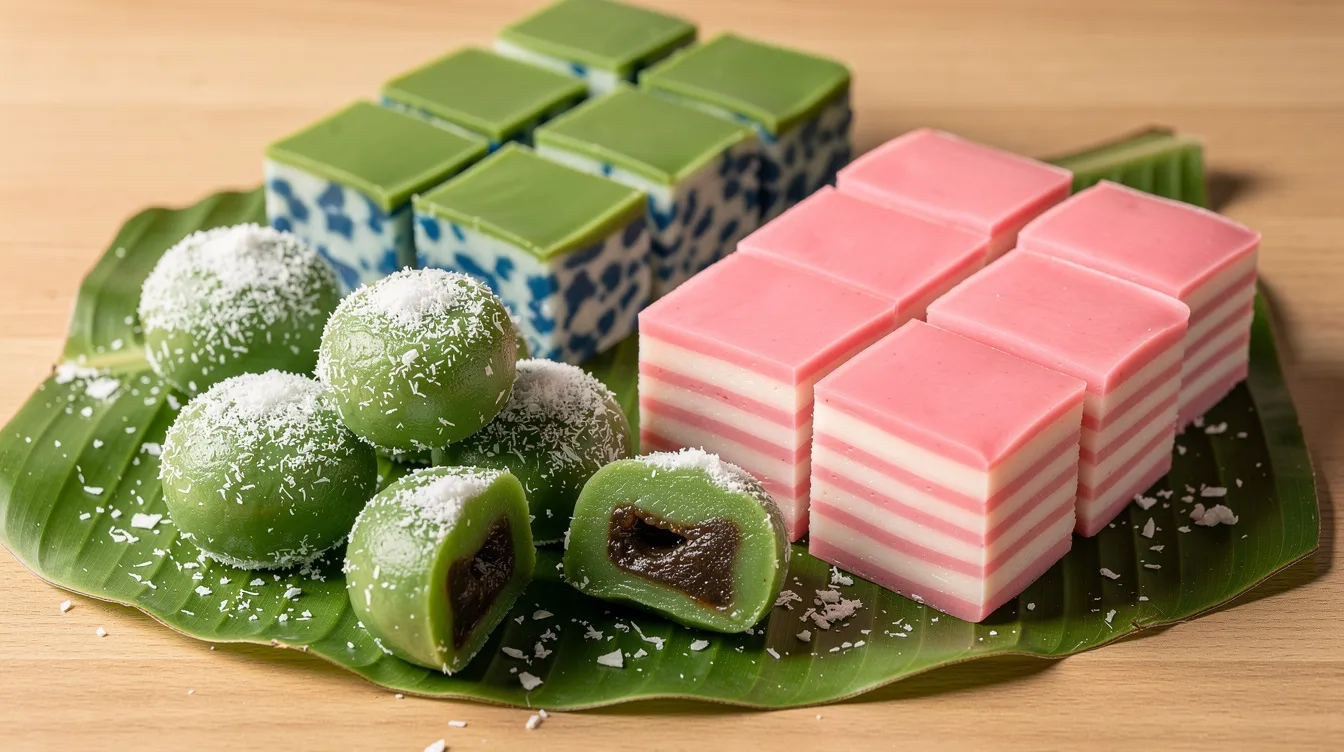
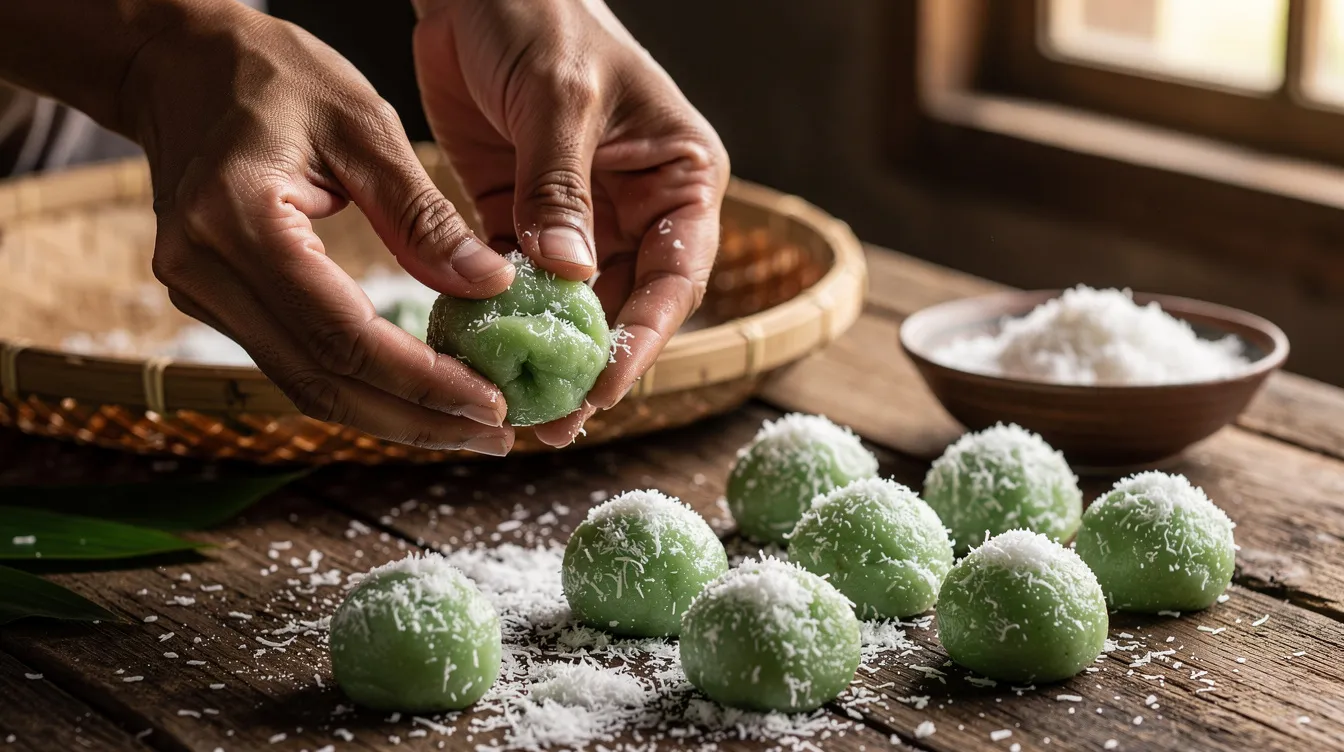
Dessert and kueh are part of the full experience, not an afterthought. These bite-sized traditional cakes-ondeh-ondeh (glutinous rice balls filled with liquid palm sugar), kueh lapis, kueh salat-represent peranakan food at its most beautiful. Handmade kueh makes a meaningful edible souvenir or gift, carrying heritage in every bite.
Hawker Centres & Food Centres: How to Eat Like a Local
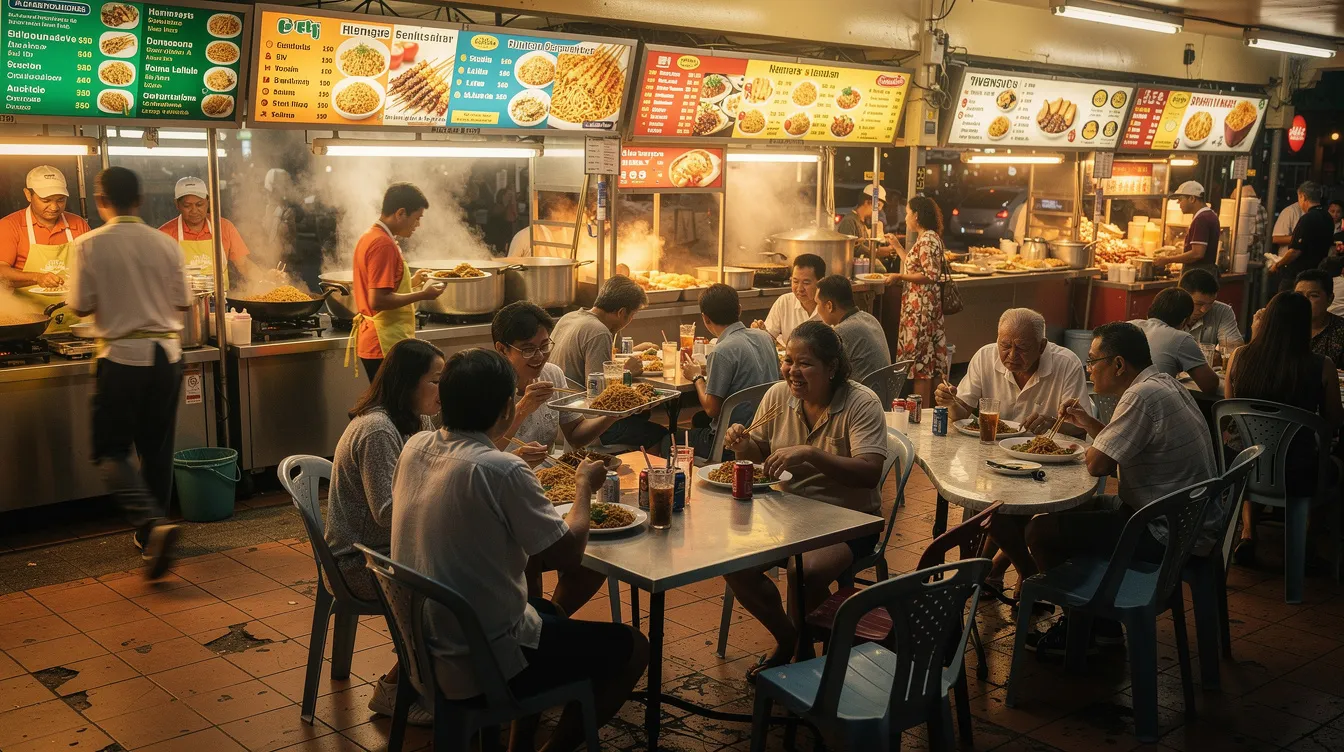
A hawker centre (or food centre) is a large, typically open-air complex housing dozens of individual food stalls under one roof, with communal seating and no service charge.
Think of it as a melting pot of flavours where every stall specialises in one or two dishes, perfected over years. Hawker centres provide affordable food for all income levels, with most dishes in the S$3–S$8 range.
Old Airport Road Food Centre
Old Airport Road Food Centre is a popular hawker centre and one of Singapore’s most beloved. Built in 1972–73 to resettle street hawkers from the Kallang area, this airport road food centre now houses approximately 168 cooked food stalls and 54 market stalls across two levels.
Located near Dakota MRT in central Singapore, it underwent a major SGD 5.8 million upgrade in 2006–7, expanding seating capacity to roughly 1,904 seats. Many stalls here have been running for decades-this is where locals go to eat, not where tourists are herded.
How to Navigate Like a Local
- Find the queue: A long line almost always signals quality. Join it patiently.
- Chope your seat: Place a tissue packet on a table to reserve it-this is the unofficial but universally respected system.
- Share tables: If the centre is busy, it is perfectly normal (and expected) to sit with strangers.
- Order simply: Most stall owners speak English or Singlish. Point at photos, say the dish name, state how many portions.
- Payment: Cash remains most common. QR-based e-payments are increasingly accepted, but credit cards rarely are at individual stalls.
- Return your tray: Clear your dishes when you are done.
What to Try at Any Hawker Centre
At any good hawker centre, aim for these categories: chicken rice, noodle dishes (hokkien mee, bak chor mee, curry noodles), rice dishes (nasi lemak with coconut rice and sambal, beef rendang from nasi padang stalls), and dessert stalls with kueh or chendol. The peak lunch rush runs 12–2 pm, dinner 6–8 pm. Go slightly earlier or later to dodge the longest queues and the worst of the midday heat.
Neighbourhoods & Hawker Centres to Explore
Food in Singapore is intensely neighbourhood-based. Each area has its own specialities, stories, and personality. Here are five areas every food lover should explore.
Chinatown & Maxwell
Chinatown Complex is one of Singapore’s largest hawker centres, packed with Chinese food staples-char kway teow cooked with wok-hei fury, roast meats glistening under heat lamps, and claypot rice simmering over charcoal.
Around the corner, Maxwell Food Centre is known for its affordable local dishes, including the famous Tian Tian chicken rice stall. You will also find Maxwell Food Centre stalls selling soy sauce chicken, thick rice noodles in savoury sauce, and carrot cake.
Joo Chiat & Katong (East Coast)
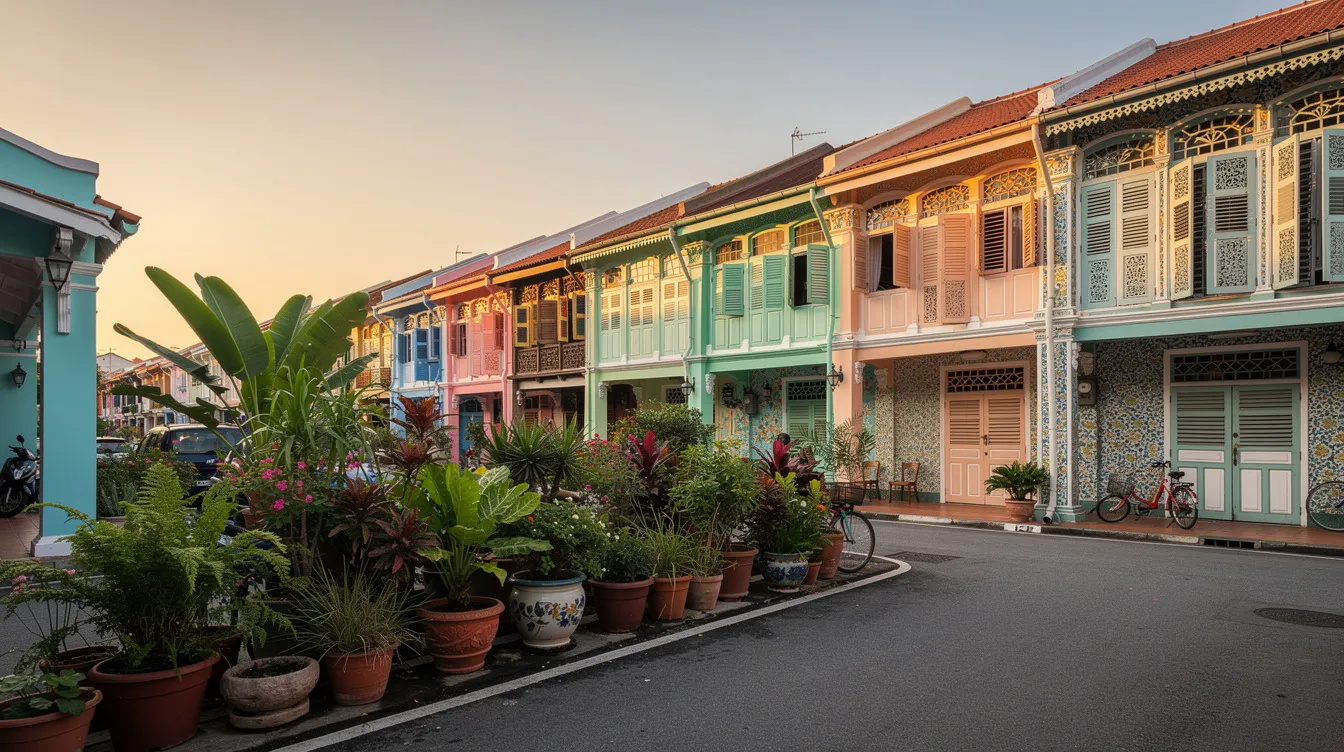
The east coast neighbourhood of Katong is the spiritual home of Peranakan cuisine and Straits Chinese heritage. Walk along Joo Chiat Road, and you will find laksa shops, kueh speciality stores, and family bakeries where traditional recipes are still made by hand daily.
This is where culinary traditions from the Peranakan community-blending Chinese cooking techniques with Malay ingredients-come alive. Peranakan culture significantly influences Singapore’s food scene, and Kueh Ho Jiak-style handmade kueh keeps these traditions breathing.
Kampong Glam & Haji Lane
Kampong Glam is the historic Malay-Arab quarter, perfect for Malay food and Middle Eastern flavours. Teh tarik (pulled milk tea), murtabak (stuffed pan-fried bread), and nasi padang with beef rendang are the stars here. The atmosphere is colourful, slightly bohemian, and deeply welcoming.
Little India & Tekka Centre
Little India is a sensory explosion-garlands of jasmine, the crack of roti prata on a griddle, and the fragrant steam of fish head curry served on banana leaf. Tekka Centre is the neighbourhood’s hawker heart, offering indian cuisine from biryani to dosai alongside Chinese and Malay stalls. This is Singapore’s diversity distilled into a single food centre.
Tiong Bahru & Lau Pa Sat
Tiong Bahru is one of Singapore’s oldest housing estates, now a trendy mix of heritage and hipster. Its market offers traditional hawker food alongside artisan coffee shops. Lau Pa Sat, meanwhile, is known for its open-air satay street that comes alive at dusk-skewers over charcoal, cold Tiger beer, and the buzz of a Singapore evening.
Planning a Simple Singapore Food Itinerary (2–3 Days)
You do not need fifty stops to understand Singaporean cuisine. Two to three focused days will give you a rich, satisfying food itinerary that covers hawker classics, neighbourhood gems, and heritage desserts. Here is how to structure it.
Day 1: Hawker Classics
- Breakfast: Kaya toast and kopi at a traditional coffee shop or eating house-this is the Singaporean way to start the day
- Lunch: Chicken rice at a central hawker centre like Maxwell Food Centre or Chinatown Complex, followed by a stroll through Chinatown
- Afternoon: Sample kueh and local desserts-ondeh-ondeh, chendol, or kueh salat at a heritage dessert stall
- Dinner: Chilli crab at a seafood restaurant, or a zi char spread with friends. For something adventurous, NOX offers a dining experience in complete darkness
Day 2: Neighbourhoods & Heritage
- Morning: Head to Joo Chiat and Katong for a Peranakan food trail-laksa for late breakfast, then visit a heritage kueh maker
- Lunch: Explore Little India and Tekka Centre for roti prata, fish head curry, and biryani
- Afternoon: Walk through Kampong Glam for teh tarik, murtabak, or a plate of nasi lemak
- Dinner: Nasi Padang with beef rendang and a selection of Malay side dishes at a Kampong Glam stall. Smith Marine Floating Restaurant combines a boat ride with a seafood meal if you want a unique evening experience
Day 3: Optional Deep Dive & Food Tour
- Morning: Join a reputable food tour covering a hawker centre like Old Airport Road Food Centre and neighbouring areas
- Afternoon: Book a kueh workshop or tasting session focused on traditional handmade kueh and local sweets
- Evening: Free exploration-revisit favourite stalls, try hokkien mee, bak kut teh, or fried chicken at a zi char stall you spotted earlier
Food Tours, Classes, and Kueh Workshops
Food tours can be transformative for tourists who feel overwhelmed by the sheer volume of options. A good guide provides orientation, cultural context, and the confidence to taste dishes you might otherwise walk past.
For food lovers visiting Singapore, a guided experience bridges the gap between “eating” and truly understanding what you are eating.
A typical Singapore food tour runs 3–4 hours, covering multiple neighbourhoods-Katong, Kampong Glam, Little India, Chinatown-with stops at a hawker centre such as Airport Road Food Centre or Maxwell.
Food tours cost $65–$100 per person for 3–4 hours, and street food tours focus exclusively on hawker centres and their stories. Walking tours with a food focus are especially rewarding because they combine history, architecture, and flavour.
Cooking classes offer a different angle: hands-on learning with a chef who teaches you the cooking techniques behind Singaporean dishes like laksa, chicken rice, or kueh. Cooking classes in Singapore cost $80–$115 per person (roughly £60–£ 90), usually lasting 2–3 hours and including all materials.
Then there are dessert-focused and heritage experiences-kueh workshops, tastings, and curated gifting sessions. These smaller-group classes (5–10 people, 1–2 hours) teach you how to make traditional kueh using natural ingredients: pandan, blue pea flower, gula Melaka, and coconut milk.
Joining a kueh-making or tasting experience is a meaningful way to preserve heritage, support local artisans, and bring home stories-not just souvenirs. Insider tip: book early, especially in June, December, and during public holidays.
Experiencing Heritage Through Desserts and Kueh
In many Singaporean families, including at Kueh Ho Jiak, recipes for kueh and traditional sweets are cherished heirlooms passed down through generations. These are not just snacks. They are edible memories- of grandmothers steaming kueh lapis one thin layer at a time, of uncles rolling ondeh-ondeh before dawn, of the quiet pride that comes from getting the texture exactly right.
Kueh (or kuih) refers to bite-sized traditional cakes and snacks, often steamed, made from rice flour, tapioca starch, coconut milk, gula Melaka (palm sugar), and natural colours drawn from pandan leaves, blue pea flower, sweet potato, or taro. Texture is everything-sticky, chewy, layered, soft, or delicately creamy.
A few types to seek out:
- Kueh lapis: Multiple thin coloured layers, each steamed individually-labour-intensive and beautiful
- Kueh salat: A pandan-infused glutinous rice base topped with rich coconut custard (kaya)
- Ondeh-ondeh: Glutinous rice balls filled with liquid gula Melaka, rolled in freshly grated coconut-bite into one and the molten palm sugar bursts across your tongue
- Ang ku kueh: Moulded red sticky skin with sweet mung bean paste filling
Handmade kueh represents the heritage-premium side of Singapore food culture: small-batch, labour-intensive, made by families who prioritise natural ingredients and cultural meaning over shortcuts. This is the opposite of mass-produced pastry.
Ways tourists can enjoy and support this tradition: visit specialist kueh shops in Katong, Tiong Bahru, or Geylang Serai; order curated kueh boxes as personal or corporate gifts; or join workshops to learn the craft firsthand. Every purchase supports the artisans who keep these culinary traditions alive.
Practical Tips: Costs, Dietary Needs, and Etiquette
Enjoying hawker food and local delights does not require a large budget. Singapore is one of the few global cities where you can eat extraordinarily well for very little, provided you know where to look.
Costs at a Glance
| Item | Typical Price Range |
| Hawker main dish | S$3–8 (£3–6) |
| Drinks (kopi, teh) | S$1.20–2.50 |
| Kueh (per piece) | S$1–2 |
| Full hawker meal (main + drink + dessert) | S$8–15 |
| Daily food budget (3 hawker meals) | S$20–33 (~$20–$33) |
| Budget for two people at hawker centres | ~$25 |
Hawker centre meals cost £3–6 per person, making them among the most affordable quality meals anywhere in the world. You can budget $20–$33 daily for three meals at hawker centres without compromising on taste or variety. Spicy food, fragrant rice dishes, and noodle bowls are all within reach.
Dietary Needs
- Halal: Many Malay and Indian stalls are halal-certified. Look for halal signage or ask staff directly.
- Vegetarian/Vegan: Most food courts and hawker centres offer vegetarian Indian, Chinese, and Western options.
- Allergies: If you have sensitivities to shellfish, pork, or coconut, tell the stall owner before ordering. Most are happy to accommodate.
Etiquette Essentials
- Queue patiently-cutting the line is deeply frowned upon
- Share tables politely; do not reserve more seats than you need
- Clear your tray and dishes when finished
- Be patient with busy stall owners-they are working hard in intense heat
Climate Comfort
Dress lightly for heat and humidity, carry water, and schedule indoor café or dessert breaks during the hottest mid-afternoon hours (2–4 pm). Many coffee shops and kueh makers offer air-conditioned respite.
Preserving Heritage One Meal (and One Kueh) at a Time
Every plate of chicken rice, every bowl of claypot rice, and every piece of handmade kueh tells a story of migration, resilience, and family in Singapore. These are not just dishes-they are living archives of a nation built by people who brought their recipes across oceans and adapted them into something entirely new.
We encourage you to slow down. Talk to hawker uncles and aunties. Ask about their recipes. Notice the care behind even the simplest dishes-the way a stall owner checks the wok-hei on every plate of char kway teow, or how a kueh maker steams each layer of kueh lapis with patient precision.
At Kueh Ho Jiak, we believe that choosing handmade, natural-ingredient kueh and supporting long-standing food stalls helps keep Singapore’s culinary heritage alive for the next generation. Every purchase from a heritage maker is a vote for tradition over convenience, for craft over mass production.
So plan your food itinerary. Book a thoughtful food tour or a kueh workshop. Sit down at a hawker centre, share a table with a stranger, and taste the soul of Singapore. When you leave, carry not just photos, but flavours and stories to share back home. That is the real Singapore food experience.
Frequently Asked Questions
How many days do I need in Singapore for a satisfying food experience?
Two to three full days focused on food will let you cover the core hawker classics, visit key neighbourhoods like Chinatown, Katong, Little India, and Kampong Glam, and fit in at least one heritage dessert or kueh experience. If you have a longer stay, you can explore deeper-revisiting favourites, trying stalls you missed, or joining a second food tour in a different area. Most food lovers find that three days hits the sweet spot between thorough and relaxed.
Is it safe to eat at hawker centres if I have a sensitive stomach?
Singapore enforces strict hygiene standards with regular government inspections of all hawker centres, so food safety is excellent by global standards. Stick to busy stalls where turnover is high (food is freshly cooked), eat dishes served hot, and avoid items that have been sitting out uncovered for extended periods. Drink bottled or freshly made beverages. Most visitors have no issues at all.
Can I easily find vegetarian or halal-friendly options?
Yes. Many Malay and Indian stalls across Singapore’s hawker centres are halal-certified, and halal signage is typically displayed clearly. Vegetarian Indian stalls, Chinese vegetarian food stalls, and even some Western food counters are found at most food courts and larger hawker centres. If unsure, check signage at the stall or simply ask the stall owner-they are usually happy to guide you.
What’s a good edible souvenir to bring home from Singapore?
Beautifully boxed traditional kueh or kueh-inspired treats make meaningful gifts-far more personal than generic souvenirs. Vacuum-packed snacks, packaged chilli sauce, bak kwa (barbecued meat jerky), and local spice pastes also travel well. Always check your home country’s customs regulations for bringing food items across borders, particularly for meat and dairy products.
Do I need to book food tours and workshops in advance?
For popular food tours, kueh workshops, and heritage tastings, booking at least one to two weeks ahead is recommended-especially for weekends or peak travel seasons like June, December, and major public holidays such as Chinese New Year or Hari Raya. Weekday sessions tend to have more availability, but advance booking ensures you secure your preferred date and group size.