



Blog Detail What Is Ang Ku Kueh? The Story Behind Singapore’s Beloved Red Tortoise Cake
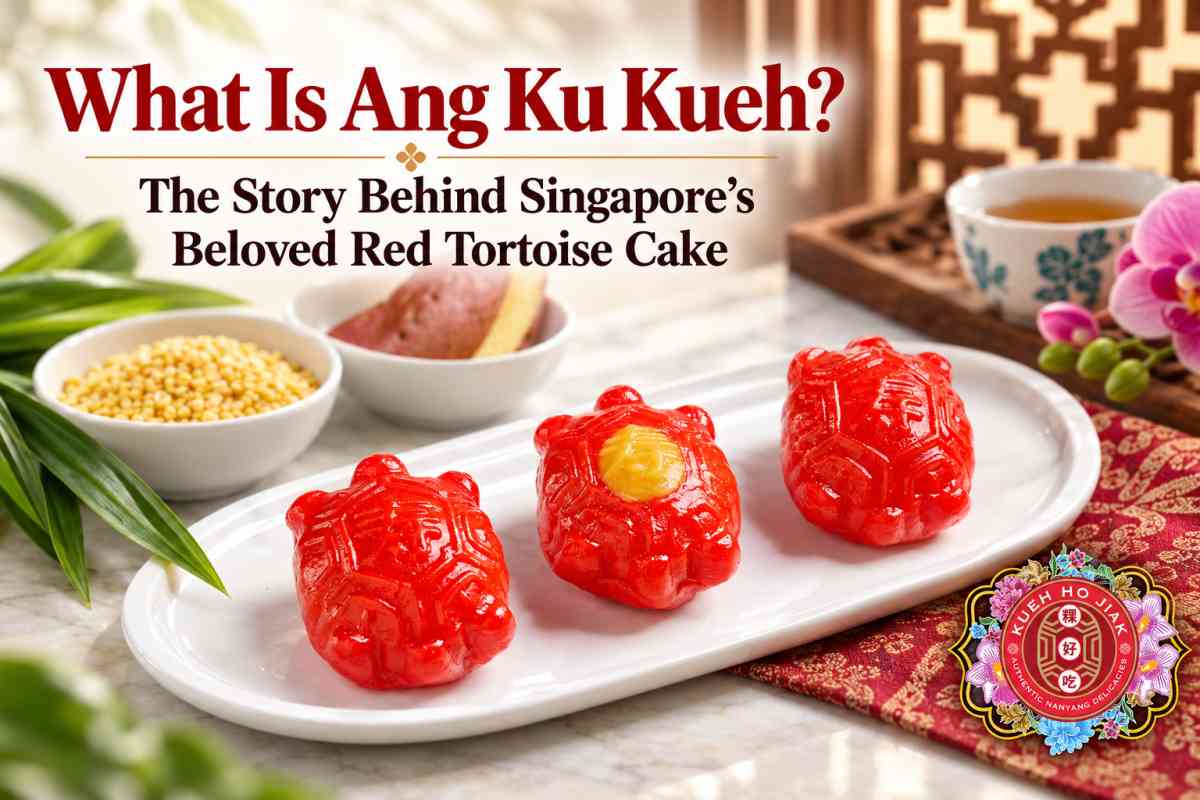
If there is one kueh that carries the weight of family blessings, childhood memories, and festive joy on its glossy red surface, it is ang ku kueh. This humble pastry has been part of Singaporean life for generations, and at Kueh Ho Jiak, we believe every piece tells a story worth sharing.
Key Takeaways
- Ang ku kueh is a traditional glutinous rice flour pastry shaped like a tortoise, filled with sweet bean paste, and steamed on a banana leaf – earning its name as the red tortoise cake.
- In Chinese culture, the colour red represents joy and prosperity, while the tortoise symbolises longevity, resilience, and wisdom, making this kueh a staple offering for milestones and festivals
. - Traditional fillings include mung bean paste and ground peanuts, though modern varieties now span durian, coconut, black sesame, and beyond.
- Ang ku kueh is a popular Southeast Asian snack in Singapore and Malaysia, deeply rooted in Hokkien and Peranakan heritage.
- At Kueh Ho Jiak, we preserve the handmade craft behind every kueh while embracing natural ingredients and meaningful celebrations.
What Is Ang Ku Kueh? (Ang Ku / Red Tortoise Cake)
Picture a small, oval pastry resting on a square of banana leaf – its surface a deep, glossy red, imprinted with delicate tortoise-shell lines. You lift it gently. The skin yields to your fingers, soft and slightly chewy, and inside, a smooth, creamy filling awaits that is sweet but never cloying. That is ang ku kueh, and for many Singaporean families, it is the taste of home.
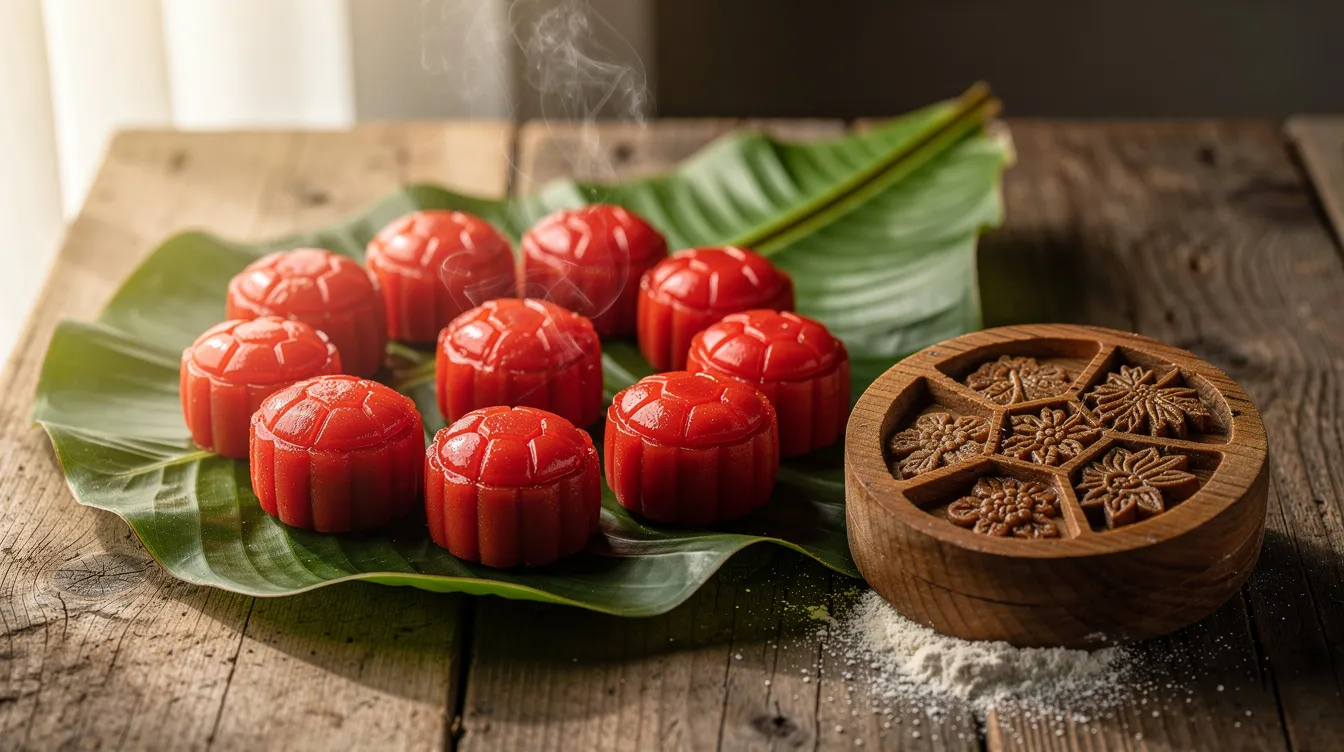
The word comes from the Hokkien dialect: “ang” means red, “ku” means tortoise, and “kueh” means cake or pastry. Together, they give us the red tortoise cake – a name as vivid as the kueh itself. Its structure is straightforward yet requires real craftsmanship: a chewy glutinous rice flour skin wraps around a sweet mung bean filling or other bean paste, then is pressed into a tortoise mould to create that signature shell pattern before steaming.
Ang ku kueh traces its origins to southern Fujian province in China, brought to Southeast Asia by Hokkien migrants who carried their recipes, their moulds, and their traditions across the sea. Over time, Peranakan communities in Singapore and Malaysia adopted and evolved the kueh, making it a beloved part of local culinary identity.
Although the classic colour is red, nowadays modern ang ku can come in natural hues – green from pandan leaves, golden from pumpkin, or earthy purple from yams – each as beautiful as the original.
History and Cultural Significance in Chinese Culture
Ang ku kueh is more than a dessert. It is a meaningful symbol in Chinese culture and Peranakan heritage, shaped by centuries of tradition. Red tortoise cakes symbolise blessings and good fortune, and ang ku kueh holds cultural significance as a symbol of longevity and prosperity.
The tortoise symbolises longevity, resilience, and wisdom in Chinese culture. Historically, offering a real tortoise to deities was ideal but impractical, so communities created red tortoise-shaped cakes as symbolic substitutes. The red colour amplifies the message: joy, celebration, and protection from misfortune. These meanings travelled with Hokkien and Peranakan communities to Singapore, where they were reinforced through decades of family practice and temple ritual.
At Kueh Ho Jiak, we see ang ku kueh as a way to keep family stories and values alive – each kueh a small, edible reminder that blessings are meant to be shared.
Newborn’s First Month and Life Milestones
One of the most cherished uses of ang ku kueh is during the man yue – the full-month celebration when a baby turns one month old. Red tortoise cakes are traditionally given during a baby’s first-month celebration, presented in boxes to relatives, friends, and neighbours as an announcement of joy and a wish for the child’s long, blessed life.
Symbolic numbers matter. Families often present sets in auspicious quantities – pairs or multiples of six – to express their hopes for abundance. Designs on the red tortoise cake mould can traditionally hint at the baby’s gender: tortoise and marbles motifs for boys, peach patterns for girls. Modern families may personalise colours and fillings instead, choosing pastel hues or favourite flavours while preserving the spirit of the tradition.
Beyond the full month, ang ku kueh appears at birthdays of grandparents and elders, weddings, housewarmings, and even exam celebrations. In Singapore today, families still order or make ang ku kueh to honour older generations – a gesture that says, “We remember, and we are grateful.”
Festivals, Temples, and Traditional Offerings
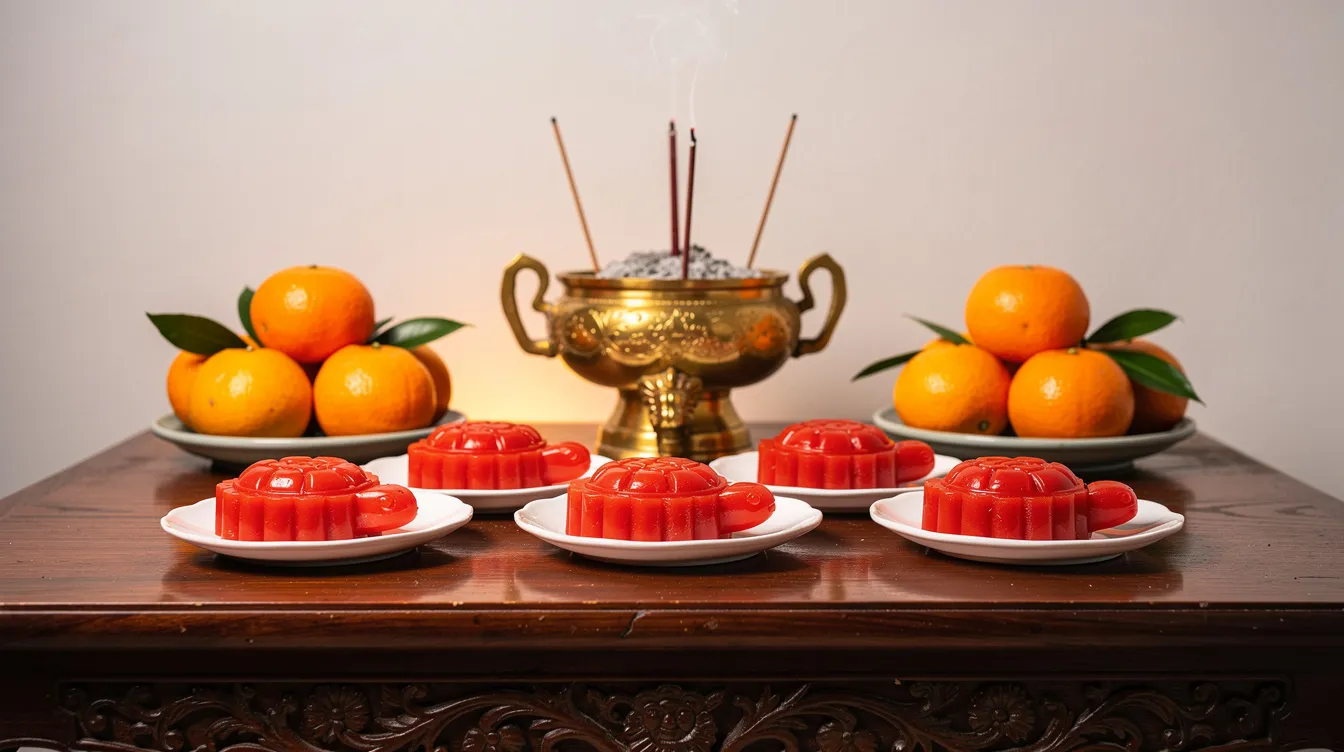
Ang ku kueh is a familiar sight on altars across Singapore. They are offered to deities during the Chinese New Year, and during temple anniversaries, the Jade Emperor’s Birthday on the ninth day of the first lunar month, and Qing Ming observances. Red tortoise cakes are prepared in multiples of six for rituals, a practice that reflects the structured reverence behind each offering.
The sweetness of the kueh symbolically “sweetens” the year ahead, expressing gratitude to deities and ancestors. At Kueh Ho Jiak, we prepare heritage-style ang ku kueh for families who still keep these temple and home-altar traditions, because we believe these dishes carry meaning that no modern convenience can replace.
Ingredients: Skin, Bean Filling, and Natural Colours
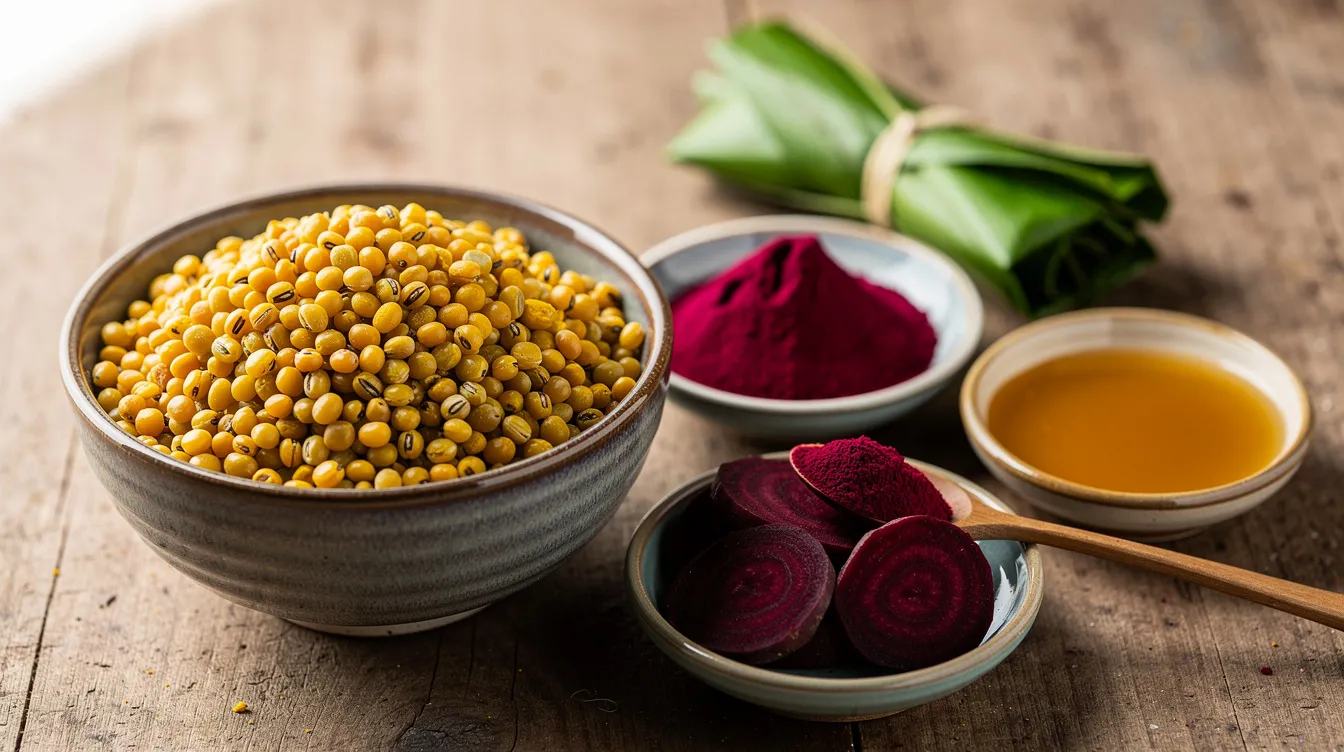
Good ang ku kueh starts with honest, natural ingredients and patient hands. The skin is made from glutinous rice flour and sweet potato, combined with sugar, hot water, and a little cooking oil for pliability and sheen. Some recipes incorporate coconut milk or pandan-infused water for extra fragrance. A touch of rice flour or tapioca flour can enhance the texture, keeping the skin tender without being overly sticky.
The classic filling is mung bean paste: skinless split mung beans soaked, steamed until soft, then mashed into a smooth paste and cooked with sugar, a little oil, and a pinch of salt. The result is creamy, balanced in sweetness, and satisfying without being heavy. Mung bean filling is traditionally used in ang ku kueh, but popular alternatives include red bean paste, sweet peanut, black sesame, yam, and even durian for the adventurous. Traditional fillings for ang ku kueh include mung bean paste, sweet peanuts, and red bean.
For colour, we favour nature’s palette: beetroot juice for that iconic “ang” red, pandan juice for green, mashed sweet potato or pumpkin for golden orange. These natural dyes enhance both the look and the taste, keeping harsh artificial colours out of the picture.
Mung Bean Filling vs Other Bean Paste Fillings
Mung bean – sometimes called green bean in local parlance – is the heart of the most classic ang ku kueh recipes. The method is simple in concept: soak the split mung beans, steam them until very soft, blend or mash them until smooth, then cook with sugar, oil, and salt over low heat until the paste holds its shape. The goal is a filling that feels silky on the tongue and lets the bean’s natural, earthy sweetness come through.
Pandan coconut filling, made with grated coconut and gula melaka, offers a fragrant, caramelised alternative that many Peranakan families adore. Other variations include fried shallot notes, coconut milk enrichments, or chunky textures for those who enjoy more bite. At Kueh Ho Jiak, we focus on balanced sweetness and creamy texture, avoiding overly oily or cloyingly sweet bean filling. Choosing the right bean paste can change the entire mood of the kueh – from light and delicate to rich and decadent.
How Traditional Ang Ku Kueh Is Shaped and Steamed
The making of ang ku kueh follows a rhythm: prepare the dough, cook the bean filling, wrap the filling in the skin, press into a mould, place on a square of banana leaf, and steam gently. Dough is kneaded until it is no longer sticky for easier handling. Add boiling water to the glutinous rice flour mix gradually, knead until the dough feels smooth and pliable, then let it cool slightly before shaping.
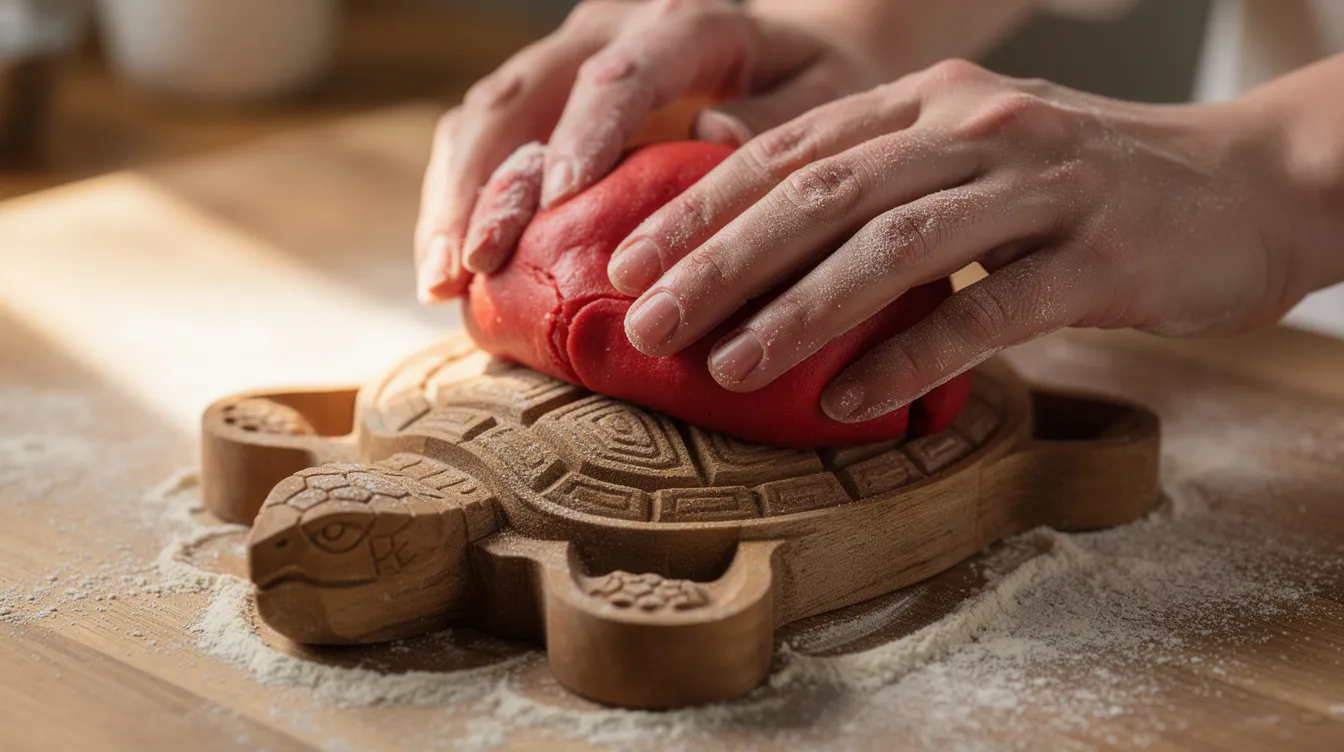
The red tortoise cake mould – carved from wood or shaped in plastic with tortoise-shell lines or floral patterns – is essential to creating the kueh’s signature look. Banana leaves, lightly oiled or blanched, serve as the base: they perfume the kueh during steaming, prevent sticking, and add that unmistakable rustic charm. The textural goal is clear: skin should be thin yet chewy and tender, the imprint should remain crisp after steaming, and the filling should be smooth and cohesive.
Using a Red Tortoise Cake Mould (or Making Ang Ku Without One)
Precision matters. Fillings are typically rolled into balls weighing about 30 grams each, while the skin portion is weighed to match the mould size. For a 50-gram mould, you might use roughly 30 grams of dough and 20 grams of filling. Flatten a ball of dough, place the filling in the middle, seal, and then press the filled dough ball into the mould. Lightly dust the mould with flour before pressing, then knock it out to reveal a neat tortoise-shell imprint.
No mould? No problem. You can still make ang ku kueh by hand – divide the dough into equal portions, roll each into a smooth ball, flatten gently, wrap, and shape into a round disc or oval. It remains culturally acceptable and just as meaningful.
At Kueh Ho Jiak, we use well-loved tortoise and floral moulds that echo old family designs, and our workshops demonstrate proper moulding technique for home bakers who want to learn how to handle these traditional tools.
Steaming, Texture, and Common Pitfalls
Set up your steamer over a pot or wok of boiling water. Ang ku kueh is steamed for about 10-15 minutes, depending on size and quantity. Banana leaves are used to enhance the steaming process, infusing each piece with fragrance while keeping the base intact.
Common pitfalls to wait for and watch out for:
- Too much heat – skin puffs up, the pattern blurs, and the texture turns tough
- Too long in the steamer – the kueh becomes overly sticky, or the filling dries out
- Condensation dripping – cover the lid with a cloth to absorb excess moisture
After steaming, brush a thin layer of neutral oil over the skin with a spatula or pastry brush to add gloss and prevent the skin from drying. To reheat, use gentle re-steaming with the banana leaf still attached – avoid microwaving uncovered, which hardens the skin.
Modern Variations and Flavours of Ang Ku Kueh
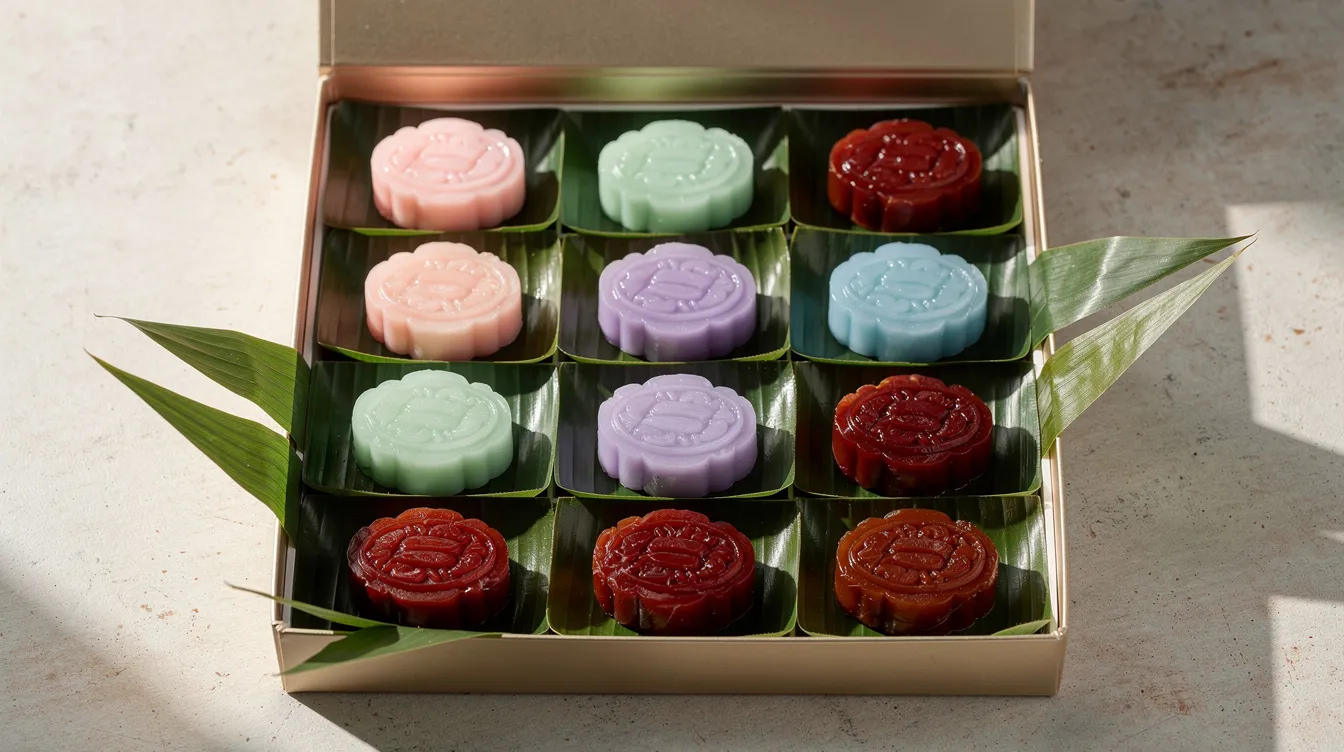
Singapore’s food culture encourages innovation while respecting heritage. Modern varieties of ang ku kueh are available in different colours to indicate different fillings – a practical and beautiful evolution. Classic flavours like mung bean, peanut, red bean, and yam remain the foundation, but innovative fillings now include durian and coconut flavours, matcha, chocolate, and blended nut pastes.
At Kueh Ho Jiak, we balance this innovation with respect for tradition, using natural colours and real ingredients rather than artificial shortcuts.
Jelly-Inspired and Contemporary Interpretations
Jelly red tortoise cakes use sweetened gelatin instead of rice flour, creating a cool, bouncy texture served chilled. While fun – especially for children – they are considered a playful variant rather than the traditional ang ku kueh. Other contemporary formats include mini bite-sized ang ku for corporate events, elegant gift box sets, and customised colours for weddings and baby showers.
We see every method of celebrating this kueh as valid, but at Kueh Ho Jiak, our approach remains heritage-first: the tortoise emblem, auspicious colours, and handmade care come before trends. Think of ang ku kueh as both an everyday snack and a thoughtful, meaningful gift shaped like a blessing you can hold in your hand.
How to Enjoy, Store, and Gift Ang Ku Kueh
The best way to enjoy ang ku kueh is fresh, warm, or at room temperature, paired with a cup of tea or kopi, shared with the people you love. Its taste is at its peak on the day it is made, when the skin is at its softest and the filling most fragrant.
Storage guidance:
| Method | Duration | Notes |
| Room temperature | Same day | Best texture and flavour |
| Airtight container, refrigerated | 1–2 days | Re-steam gently before eating |
| Freezing | Not recommended | Can compromise skin texture and imprint |
For gifting, ang ku kueh communicates blessings and appreciation like few other dishes can: baby full-month sets, celebration platters, and corporate boxes all carry the weight of tradition. At Kueh Ho Jiak, we craft heritage-premium ang ku kueh for catering, festive seasons, and hands-on workshops where families learn to create and shape these kueh together – preserving heritage one kueh at a time.
FAQ about Ang Ku Kueh
Is ang ku kueh always red, and can I request other colours?
Traditionally, ang ku kueh is red because “ang” symbolises prosperity and joy, making it essential for auspicious events and temple offerings. In modern practice, natural colours like green from pandan, yellow from pumpkin, or purple from yam are common – especially in Singapore’s creative kueh scene. At Kueh Ho Jiak, we offer a range of natural colours for celebrations while preserving the tortoise motif and its cultural significance.
Does ang ku kueh always have mung bean filling?
Mung bean paste is the most classic filling, especially for Hokkien and Peranakan-style ang ku kueh. Popular alternatives include sweet peanut, red bean paste, black sesame, coconut, yam, and durian for those who prefer stronger flavours. Some families choose different bean fillings to represent various wishes – abundance, sweetness in life – when assembling their celebration sets.
How long can I keep ang ku kueh, and how should I store it?
Ang ku kueh is best enjoyed on the day it is made for peak softness and fragrance. Store leftovers in an airtight container in the fridge for about one to two days, then re-steam lightly to soften before eating. At Kueh Ho Jiak, we prepare ang ku kueh fresh to order and recommend avoiding long-term freezing to protect the skin’s texture and imprint.
Is ang ku kueh gluten-free or suitable for special diets?
The skin is made from glutinous rice flour, which is naturally gluten-free despite the word “glutinous” in its name. However, cross-contamination and other ingredients must still be considered. If you have coeliac disease or strict dietary needs, confirm with the maker regarding kitchen practices and any wheat-based additives. At Kueh Ho Jiak, we focus on natural, simple ingredients and can, where possible, discuss specific dietary requirements for catering or workshop participants.
Can I learn to make ang ku kueh myself?
Absolutely. Home cooks can learn to make ang ku kueh with patience and the right guidance. Start with a simple mung bean filling and a basic mould, practising dough softness and steaming time to get the right chew. Kueh Ho Jiak offers heritage-focused kueh workshops in Singapore, where participants knead, flatten, press, and shape ang ku kueh by hand – bringing a piece of tradition back into their own kitchens.